
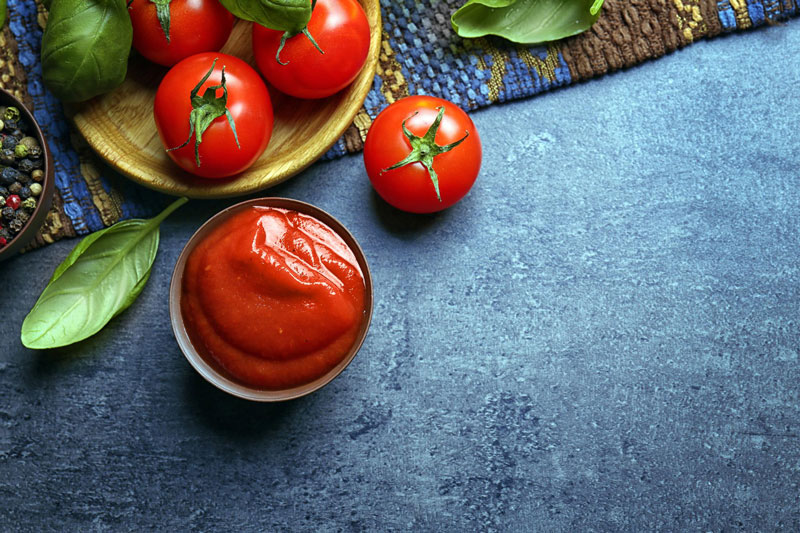
Have you ever compared homemade tomato paste with its factory-made counterpart? A noticeable distinction often emerges: the color. Homemade tomato paste tends to have a lighter hue compared to the richer and more attractive color of factory-made paste. Some attribute this disparity to artificial colors and additives in factory-made products. However, there’s more to explore behind the paleness of homemade pastes. Let’s delve into this comparison.
The Role of Lycopene in Tomato Paste Color:
Understanding the process behind the vibrant red color of tomato paste is crucial. The transformation of tomatoes from their initial white or green appearance, lacking taste and aroma, to the rich red hue is due to a compound called lycopene. As tomatoes mature, lycopene contributes to their color, taste, and aroma. Chlorophyll, another substance in tomatoes, absorbs sunlight and heat, facilitating the distribution of lycopene on the tomato’s surface. Notably, this process coincides with the distribution of antioxidants and anti-cancer properties in tomatoes, indicating that no additives are required for their coloration.
Advantages of Factory-made Tomato Paste:
The thickness disparity between homemade and factory-made tomato paste often draws attention. Contrary to assumptions, factories do not employ food coloring or additives in their tomato paste. High-volume production in factories renders the use of food coloring economically unfeasible. The production process in factories involves sophisticated machinery, ensuring precise temperature control and calculated procedures. Specifically, the color intensity of factory-made tomato paste is achieved through a process involving low, indirect, and prolonged temperatures, facilitating a more robust release of lycopene onto the paste’s surface, enhancing its red color.
Understanding the Lighter Color of Homemade Tomato Paste:
The paler color of homemade tomato paste can be attributed to several factors. Homemade processes lack the precision and controlled conditions present in factory environments. The temperature regulation and duration used in homemade production might not facilitate the same level of lycopene release as in factory-made paste, resulting in a lighter color.
Key Factors Influencing the Color of Homemade Tomato Paste
Homemade tomato paste, crafted with just a few pots and gas heat, demands meticulous attention to detail. Even seemingly minor actions play a significant role in creating a successful final product. Care and precision are pivotal as they can greatly impact the outcome. Highlighted below are crucial reasons contributing to the paleness of homemade pastes, along with preventive measures to enhance their color and appeal.
1- Quality of Tomatoes:
Tomatoes are paramount in both homemade and factory-made tomato paste. To achieve vibrant color, taste, and fragrance, the initial step involves selecting high-quality tomatoes. Ensure purchased tomatoes exhibit good color without signs of rust, mold, or damage. Thoroughly wash the tomatoes before commencing the cooking process to prevent any mold or dirt from contaminating the batch.
2- Control of Heat:
Effective thickness and color in tomato paste hinge on the regulation of heat. Lycopene, essential for color development, necessitates patience during its release. High and direct heat during cooking is a common reason for the faded appearance of homemade pastes. Initially, opt for indirect heat, perhaps using a diffuser, to mitigate this issue. Then, maintain the flame at the lowest setting, adjusting the cooking time accordingly. This gradual process enhances color, thickness, and flavor. Avoid rushing and adhere to the cooking schedule. Use zinc pots for cooking as Teflon pots are unsuitable. Contrary to popular belief, copper pots are not ideal for this purpose either.
3- Water Content:
The addition of water and excessive salt can significantly impact the color and taste of homemade tomato paste. Adhere strictly to the cooking instructions, avoiding additional substances that might compromise the paste’s quality. Diligence in following these guidelines ensures optimal color and taste in the final product.